
Is a Heat Pump Right for Your Mountain View Home?
There is a quiet revolution happening in residential HVAC across the Bay Area, and Mountain View homeowners are right in the middle of it. Heat pumps—once considered a niche technology best suited for warmer southern climates—have become one of the most talked-about home comfort solutions in California. Utility companies are promoting them. State energy programs are offering rebates for them. Neighbors are installing them. And homeowners who have lived with a separate furnace and air conditioner for decades are starting to ask a very reasonable question: is a heat pump actually right for my home?
The answer, like most things in HVAC, depends on the specifics. Heat pumps are genuinely impressive systems with real advantages for many Mountain View properties. But they are not a universal solution, and the decision to install one deserves more than a quick answer. It deserves an honest, professional overview of how these systems work, how they perform in the local Bay Area climate, and what the transition actually looks like for a homeowner.
At FairPrice Heating & Cooling, we have helped Bay Area homeowners navigate this decision for over a decade. Our goal is always to match the right equipment to the right home—not to sell a trend. This guide is designed to give Mountain View residents the information they need to make a confident, well-informed choice.
What a heat pump actually does
Before evaluating whether a heat pump is right for your home, it helps to understand what makes these systems fundamentally different from traditional HVAC equipment.
A conventional home comfort setup typically involves two separate systems: a furnace that generates heat by burning gas or using electric resistance, and an air conditioner that removes heat from the home during warmer months. These are two distinct pieces of equipment with separate operating principles, separate maintenance needs, and separate energy sources.
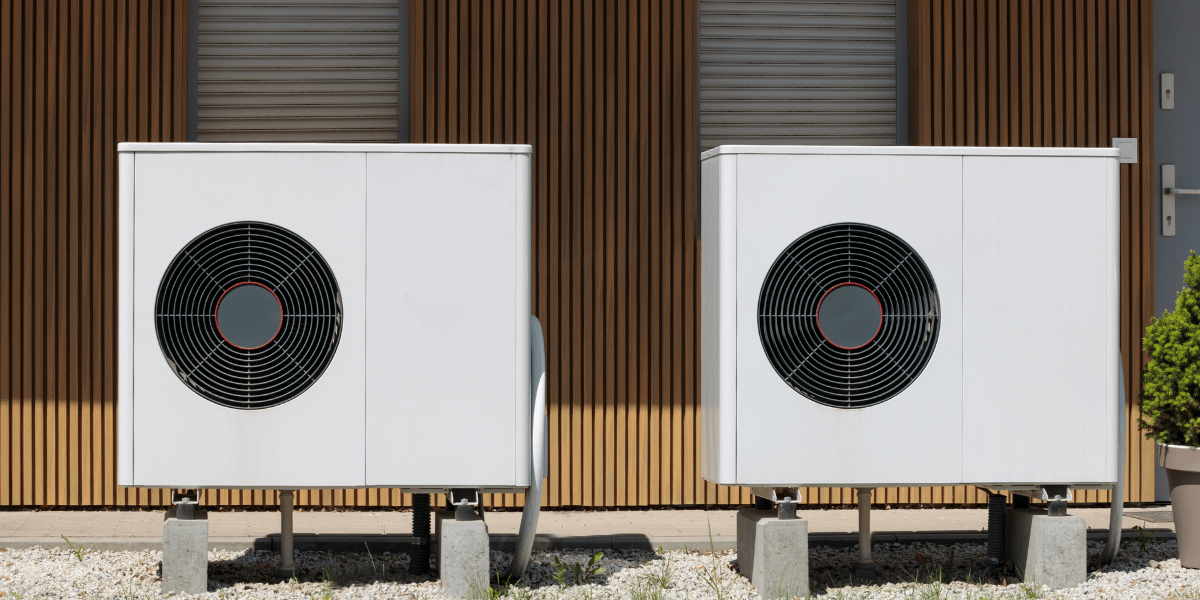
A heat pump does both jobs with a single system. Rather than generating heat by burning fuel, it moves heat from one place to another. In the summer, it works like a standard air conditioner—extracting heat from inside the home and releasing it outdoors. In the winter, it reverses the process, pulling heat energy from the outdoor air and transferring it inside to warm the home.
This heat-transfer process is remarkably efficient. Because the system is moving heat rather than creating it, it can deliver significantly more heating or cooling energy than the electrical energy it consumes. The U.S. Department of Energy notes that modern heat pumps can deliver up to three times more heat energy than the electrical energy they use—a level of efficiency that no gas furnace or electric resistance heater can match.
For Mountain View homeowners who are conscious of energy costs and environmental impact, this efficiency advantage is one of the most compelling reasons to consider making the switch.
How heat pumps perform in Mountain View’s climate
One of the most common concerns homeowners raise about heat pumps is cold-weather performance. Older heat pump technology struggled in climates with harsh winters because the systems became less efficient as outdoor temperatures dropped. In regions with prolonged freezing temperatures, this was a legitimate limitation.
Mountain View, however, sits in one of the most favorable climates in the country for heat pump operation. The city enjoys mild winters with average low temperatures rarely dipping below the mid-40s Fahrenheit. Even on the coldest nights of the year, temperatures in Mountain View almost never approach the threshold where older heat pump technology would struggle.
Modern cold-climate heat pumps have pushed that threshold even further. Today’s variable-speed inverter-driven systems can operate efficiently at outdoor temperatures well below freezing—a capability that far exceeds what Mountain View winters will ever demand. The California Energy Commission has recognized heat pumps as a cornerstone technology for the state’s clean energy goals, in large part because California’s mild climate makes them exceptionally well-suited for residential use.
On the cooling side, Mountain View summers are warm but not extreme. Daytime highs typically reach the mid-80s to low 90s, with coastal breezes providing natural relief in the evenings. A properly sized heat pump handles this cooling load with ease, delivering the same comfort as a traditional central air conditioner while consuming less energy overall.
The combination of mild winters and moderate summers makes Mountain View one of the ideal locations in the country for heat pump technology to perform at its best.
The efficiency advantage and what it means for your utility bills
Efficiency is where heat pumps make their strongest financial case. The metric used to measure heating efficiency in heat pumps is called the Coefficient of Performance, or COP. A COP of 3.0 means the system delivers three units of heat energy for every one unit of electrical energy consumed. By comparison, even the most efficient gas furnace converts fuel to heat at a ratio that cannot exceed 1:1.
In Mountain View’s climate, where a heat pump operates in its most efficient range for the majority of the heating season, the energy savings can be substantial. Homeowners who switch from an older gas furnace to a modern heat pump often see meaningful reductions in their total energy costs, particularly as natural gas prices fluctuate.
The Environmental Protection Agency (EPA) highlights heat pumps as one of the most effective ways to reduce household carbon emissions, which aligns with the values of many Mountain View residents who are mindful of their environmental footprint. California’s electricity grid is also becoming progressively cleaner as renewable energy sources expand, which means the environmental benefit of running an electric heat pump will only improve over time.
For homeowners interested in pairing a heat pump with solar panels, the combination can be particularly powerful—using clean, self-generated electricity to run an already highly efficient system.
| Feature | Traditional Gas Furnace + AC | Modern Heat Pump System |
|---|---|---|
| Heating efficiency | Up to ~98% AFUE (gas) | 200–300%+ equivalent efficiency |
| Cooling capability | Separate AC unit required | Built-in cooling function |
| Number of systems | Two (furnace + AC) | One integrated system |
| Energy source | Gas (heat) + Electric (cooling) | Electric only |
| Environmental impact | Carbon emissions from gas | Lower emissions, improves with clean grid |
| Rebate eligibility | Limited | Strong state and federal incentives |
| Ideal climate | All climates | Mild to moderate climates (ideal for Bay Area) |
What types of heat pumps are available for Mountain View homes
Not all heat pumps are the same, and the right type for your home depends on your existing infrastructure, your property layout, and your comfort goals.
The most common type is the ducted central heat pump, which connects to your home’s existing ductwork and operates much like a traditional central HVAC system. If your Mountain View home already has ducts in good condition, this is often the most straightforward path to upgrading. Our team can evaluate your existing ductwork to determine whether it is compatible with a new heat pump system or whether any modifications are needed.
For homes without existing ductwork, or for homeowners who want to add comfort to specific areas like a home addition or converted garage, ductless mini split heat pumps are an excellent option. These systems consist of an outdoor unit connected to one or more indoor air handlers, providing zoned heating and cooling without the need for ducts. We covered this technology in detail in our guide on ductless mini split solutions for home additions.
There are also dual-fuel systems, which pair a heat pump with a gas furnace as a backup heat source. In Mountain View’s climate, this configuration is rarely necessary, but it can provide peace of mind for homeowners who are not ready to fully commit to an all-electric setup.
The installation process and what to expect
Transitioning to a heat pump is a significant home improvement project, and understanding the process helps homeowners plan appropriately. The first step is always a professional load calculation—a detailed assessment of your home’s heating and cooling requirements based on square footage, insulation levels, window area, ceiling height, and local climate data. This calculation determines the correct size of the system, which is critical for both comfort and efficiency.
Oversized systems short-cycle, meaning they turn on and off too frequently without completing a full conditioning cycle. This leads to humidity problems, uneven temperatures, and accelerated wear. Undersized systems run continuously without reaching the desired temperature. Proper sizing is not a guess—it is an engineering calculation that a qualified technician performs before any equipment is selected.
Once the system is sized and selected, installation typically involves replacing the outdoor condenser unit, installing a new air handler or connecting to the existing one, and in some cases upgrading the electrical panel to accommodate the heat pump’s power requirements. Our licensed technicians handle every aspect of the heat pump installation process, ensuring that the system is commissioned correctly and that you understand how to operate it for maximum efficiency.
Financial incentives available to Mountain View homeowners
The financial case for heat pumps has been strengthened significantly by state and federal incentive programs. The federal Inflation Reduction Act introduced substantial tax credits for qualifying heat pump installations, and California offers additional rebate programs through utilities and state energy agencies.
The California Energy Commission and local utilities like PG&E have programs designed to reduce the upfront cost of transitioning to high-efficiency electric heating and cooling. These incentives can meaningfully offset the installation cost, making the long-term economics of a heat pump even more attractive.
It is worth consulting with a tax professional or reviewing current program details directly, as incentive amounts and eligibility requirements can change. Our team at FairPrice Heating & Cooling stays current on available programs and can help Mountain View homeowners understand what may apply to their specific situation.
When a heat pump may not be the right fit
Honest guidance means acknowledging that a heat pump is not the right answer for every home. There are situations where a traditional system or a hybrid approach makes more practical sense.
Homes with very old or poorly designed ductwork may require significant duct upgrades before a central heat pump can perform properly. In some cases, the cost of duct remediation changes the financial calculus. Homes with very limited electrical capacity may also require a panel upgrade, which adds to the project cost.
Additionally, homeowners who have recently invested in a high-efficiency gas furnace that still has many years of life remaining may find that the timing does not justify an immediate switch. In those cases, planning for a heat pump at the next natural replacement cycle is a sensible approach.
The best way to determine whether a heat pump is right for your Mountain View home is to have a professional assessment performed by a qualified HVAC technician who can evaluate your specific equipment, infrastructure, and comfort needs without a predetermined agenda.
Why Mountain View homeowners choose FairPrice Heating & Cooling
Since 2012, FairPrice Heating & Cooling has been a trusted HVAC partner for Bay Area homeowners. As a family-owned and operated company, we approach every project with the same commitment to honest pricing, technical excellence, and genuine customer care that has defined our business from the beginning.
Our technicians are licensed, insured, and experienced with the full range of heat pump technologies available today. We take the time to understand your home, explain your options clearly, and recommend the solution that truly fits your needs. We offer 24/7 emergency service, flexible financing options, and a 100% satisfaction guarantee on all of our work.
Whether you are ready to move forward with a heat pump installation or simply want a professional opinion on whether it makes sense for your home, we are here to help.
Take the next step toward smarter home comfort
A heat pump could be one of the best investments you make in your Mountain View home—delivering year-round comfort, lower energy costs, and a reduced environmental footprint from a single, elegant system. But the right decision starts with the right information.
Contact FairPrice Heating & Cooling today to schedule a professional consultation. Our team will evaluate your home, answer your questions honestly, and help you determine whether a heat pump is the right fit. Call (408) 608-8246 to get started.
FAQ
How long does a heat pump last compared to a traditional furnace and AC?
A well-maintained heat pump typically lasts 15 to 20 years, which is comparable to a quality central air conditioner and often longer than many gas furnaces. Because a heat pump handles both heating and cooling, you are also maintaining one system instead of two, which can simplify long-term ownership. Regular annual service is the most important factor in maximizing the lifespan of any heat pump.
Will a heat pump keep my Mountain View home warm enough in winter?
Yes, for the vast majority of Mountain View winters, a properly sized modern heat pump will maintain comfortable indoor temperatures without any supplemental heat source. Today’s inverter-driven systems are rated to operate efficiently at outdoor temperatures well below what Mountain View typically experiences. On the rare occasion that temperatures drop unusually low, many systems have a built-in electric resistance backup that activates automatically.
Are heat pumps significantly more expensive to install than traditional systems?
The upfront cost of a heat pump is generally higher than a standalone furnace or air conditioner, but it replaces both systems simultaneously. When you factor in available federal tax credits and California utility rebates, the net cost difference often narrows considerably. Over the life of the system, the energy savings typically offset the higher initial investment.
Can I use my existing ductwork with a new heat pump?
In many cases, yes. If your existing ducts are in good condition and properly sized, they can often be used with a new ducted heat pump system. Our technicians will evaluate your ductwork as part of the installation assessment and let you know if any modifications are needed before the new system is installed.
How does a heat pump affect my electricity bill?
Most homeowners who switch from a gas furnace to a heat pump see their electricity usage increase during the heating season, but their overall energy costs often decrease because heat pumps are so much more efficient than gas heating. The exact impact depends on your current system’s efficiency, local electricity and gas rates, and how well your home is insulated.
Is a ductless mini split heat pump a good option for my home?
Ductless systems are an excellent choice for homes without existing ductwork, for room additions, or for homeowners who want zoned comfort in specific areas. They offer the same efficiency advantages as ducted heat pumps with the added flexibility of independent temperature control in each zone. Our team can help you determine whether a ducted or ductless approach is the better fit for your property.
What maintenance does a heat pump require?
Heat pumps benefit from the same annual professional service that any HVAC system needs. This includes cleaning coils, checking refrigerant levels, testing electrical components, and verifying overall system performance. Homeowners should also replace or clean air filters regularly. Because a heat pump runs year-round rather than seasonally, consistent maintenance is especially important for protecting the equipment.